About our guides
Pickleball Portal has published pickleball guides since 2017. We are reviewing our archive for outdated prices, product details and unsupported testing claims. An article date does not establish that every claim has been rechecked. Confirm current product details and purchase terms with the retailer. We may earn a commission through affiliate links.
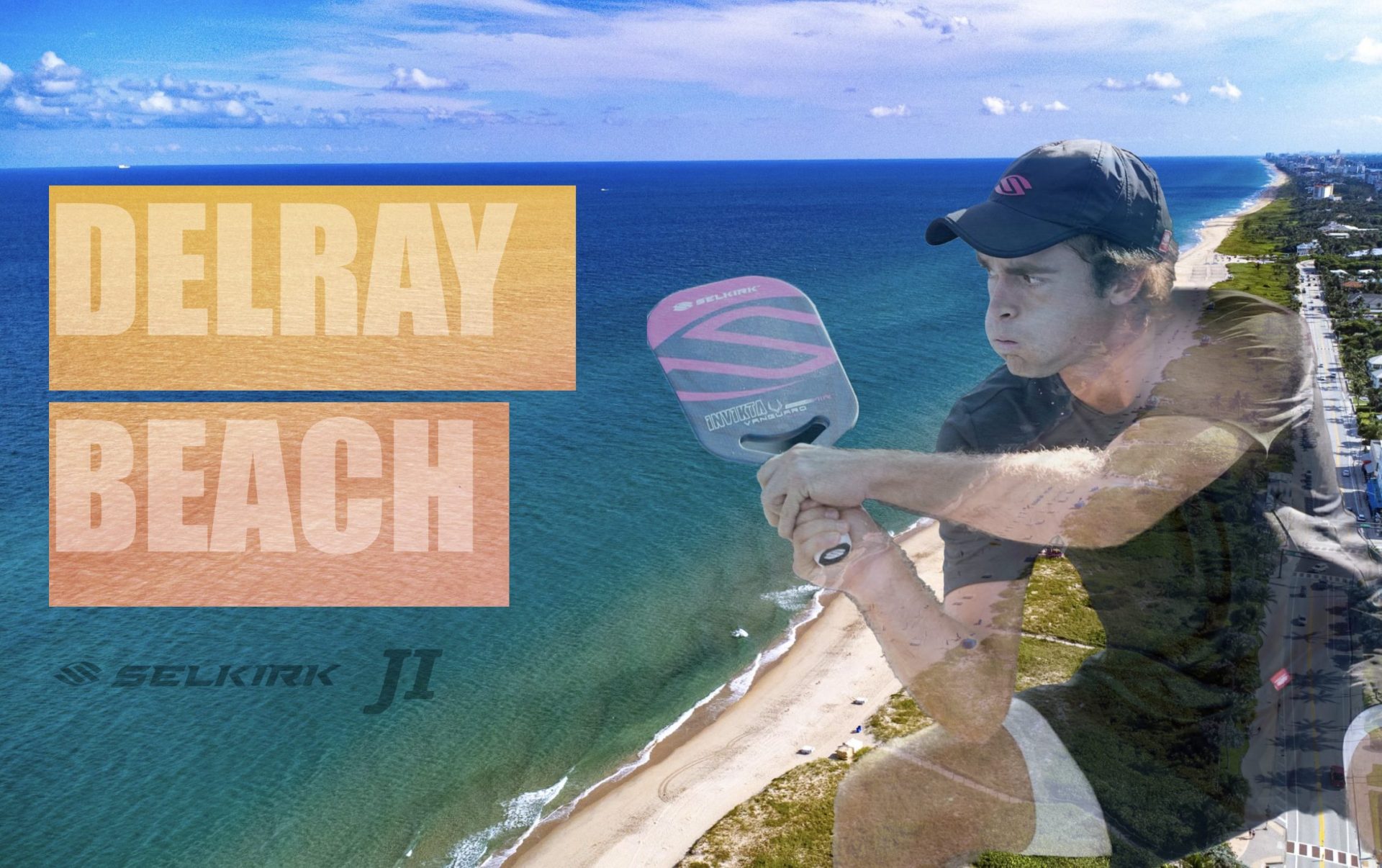
Hey guys, this is James Ignatowich from Delray Beach, Fl. Today, we're going to talk about when to go for a forehand Erne and when to go for a backhand Erne, and also the pros and cons of each approach. The Erne is arguably the most exciting shot in pickleball—a highlight-reel play that can completely change the momentum of a match.
If you're new to the Erne concept, check out our complete Erne guide here before diving into the forehand vs. backhand nuances.
Forehand Erne vs Backhand Erne: The Strategic Choice
I feel pretty comfortable with both of them. I think for me, I can get more power with a forehand Erne. In general, you're going to be moving to your left, so you can really slap with a forehand Erne, and you can also reach more. So if I were to use a backhand Erne, it would be difficult to reach the right side of my right shoulder. But if I'm using a forehand Erne, I can use way more reach.
And that's not because I'm tall—I mean, you've seen there's a lot of players that can use a forehand Erne with a lot of success, regardless of height.
The Power Advantage: Forehand Erne
The biomechanics of a forehand naturally generate more power than a backhand for most players. When you're running to your left (for right-handed players) to execute an Erne, your body rotation can flow into the shot. This creates a kinetic chain:
- Push off your right leg as you move left
- Rotate your hips through the shot
- Uncoil your shoulders for maximum acceleration
- Snap through with your arm at contact
This coordinated sequence produces significantly more paddle head speed than a backhand, where you're more isolated and compact. I can generate an extra 10-15 MPH on my forehand Erne compared to my backhand.
The Reach Factor
So I think the biggest pro of a forehand Erne is you can reach farther and you can cut off more court.
Here's why reach matters: when you're attempting an Erne, you're often stretching to intercept a ball that's traveling wide. With a forehand, your reach extends naturally in the direction you're moving. The paddle becomes an extension of your arm in a way that feels anatomically natural.
Reach comparison (for a right-handed player):
- Forehand Erne: Can reach 6-8 inches farther left
- Backhand Erne: Limited by shoulder rotation and arm length
This extra reach means you can cut off balls that would otherwise be safe for your opponent. It expands the "Erne zone" significantly.
Court Coverage: Cutting Off More Angles
The forehand Erne allows you to cut off a wider range of cross-court shots. When opponents dink cross-court from your right to your partner's left, you can run around the post and intercept with a forehand, covering balls that would be 2-3 feet outside the court boundary.
This aggressive court coverage creates pressure. Once opponents know you're willing and able to Erne with your forehand, they become hesitant to hit cross-court dinks, which limits their options and makes them more predictable.
When the Backhand Erne Is Superior
With a backhand Erne, though, the advantage there is I think you can actually meet it a little earlier. And if the ball is in the corner near the post—maybe a foot or two feet from the sideline—it's easier to hit a backhand Erne there. Otherwise, you might get jammed up, especially if you try to take a big swing.
Timing: The Early Contact Window
The backhand Erne has a critical advantage: you can meet the ball earlier in its flight path. Because the backhand position puts the paddle closer to the sideline naturally, you don't have to reach across your body.
This early contact point means:
- Less time for opponents to react and protect
- Better angles — you can redirect more sharply
- More margin for error — the ball hasn't descended as much
When you're running wide and the ball is coming fast, that split-second difference in timing can be the difference between a winner and a mishit into the net.
The Corner Pocket: Balls Near the Post
So when I'm on that side of the court, or if I see that it's more of a reactionary Erne that's very much close to the sideline, I'll usually take it with a backhand. And then if I see that the ball is coming from the middle and I'm trying to Erne it, then I'll use a forehand to get more reach.
The backhand Erne excels when the ball is tight to the sideline, roughly 1-2 feet from the net post. Here's why:
Forehand in this situation: You have to reach across your body, creating an awkward swing path. You're likely to get jammed (the ball gets too close to your body before you can swing) or mis-hit.
Backhand in this situation: Your natural swing path is already aligned with the ball's position. You can stay compact, meet it in front, and punch through the shot without contorting your body.
Think of it this way: the backhand is your precision tool for tight-corner Ernes, while the forehand is your power tool for balls you need to run down.
How to Choose a Pickleball Paddle: Fit, Demo and Buying Guide
Reactionary vs. Planned Ernes
There are two types of Ernes, and your forehand/backhand choice often depends on which type you're executing:
Planned/Poaching Erne
You see the pattern developing—opponent keeps dinking cross-court. You anticipate the next one and take off before they hit. This is a poach.
Best option: Forehand Erne Why: You have time to set up, you're running with purpose, and you can generate maximum power
Reactionary Erne
The ball is already in the air, coming wide, and you react instinctively. This is a scramble Erne.
Best option: Backhand Erne Why: You need to meet it early, you don't have time for a big swing, and you need precision over power
Decision Matrix: Forehand or Backhand?
Use this quick decision guide:
| Situation | Best Choice | Why |
|---|---|---|
| Ball 2+ feet from sideline | Forehand | Need reach and power |
| Ball within 1-2 feet of sideline | Backhand | Better angle, less jamming |
| Planned poach | Forehand | Time to set up for power |
| Reactionary scramble | Backhand | Early contact, quick execution |
| Want to finish the point | Forehand | More pace, harder to defend |
| Need placement over power | Backhand | Better control, sharper angles |
The Risk/Reward Calculation
Both Ernes carry risk—you're leaving your side of the court exposed. But the risk profiles differ:
Forehand Erne Risks
- Bigger commitment — The wind-up and swing take longer
- More vulnerable if you miss — You're off the court and out of position
- Can be baited — Aggressive opponents might hit behind you
Backhand Erne Risks
- Less power — Easier for opponents to reset if you don't hit a winner
- Can get blocked — The compact swing gives opponents more time to react
My philosophy: Use the forehand Erne when you're confident you can finish the point. Use the backhand Erne when you want to apply pressure or create an advantage without as much commitment.
Build Your Paddle Shortlist
Compare listed offers by budget, weight and shape
Technique Tips for Each
Forehand Erne Mechanics
- Read early — Start moving as soon as you recognize the cross-court dink pattern
- Stay low — Bend your knees as you run, don't stand up
- Get outside the court — You need to be fully around the post
- Drive through the ball — Transfer your forward momentum into the shot
- Aim for feet or corners — Don't just hit hard; hit with purpose
Backhand Erne Mechanics
- Quick first step — Explosive lateral movement
- Compact swing — No big backswing; you don't have time
- Firm wrist — Keep the paddle stable through contact
- Redirect, don't power — Use their pace, add angle
- Recover immediately — Be ready to get back if they somehow return it
Paddle Selection for Erne Success
Your paddle choice can enhance or limit your Erne effectiveness. For Ernes, I prefer:
- Power-oriented paddle — Helps compensate for off-balance shots
- Elongated shape — Adds crucial reach (1-2 inches makes a difference)
- Lighter weight (7.8-8.0 oz) — Faster swing speed for reactive Ernes
Check out our paddle buying guide for recommendations, or see what paddles top pros use for Erne-heavy play styles.
Common Mistakes Players Make
Mistake #1: Not Committing
Players drift toward the sideline instead of sprinting. Half-hearted Ernes result in mishits or balls you can't reach. Fix: Commit fully or don't go at all.
Mistake #2: Going Too Often
The Erne is most effective when used sparingly. If you try it every other point, opponents adjust and start hitting behind you. Fix: Use it 2-3 times per match for maximum impact.
Mistake #3: Wrong Side Selection
Players defaulting to forehand even when backhand is the better choice (or vice versa). Fix: Use the decision matrix above and drill both sides.
Mistake #4: Poor Communication with Partner
Your partner needs to know you're going for an Erne so they can cover the middle. Fix: Call "Erne!" or "I've got it!" as you start moving.
Mistake #5: Hitting into the Court
Some players go around the post but hit the ball back into the court (over the net). This wastes the Erne opportunity—hit it around the post at an angle. That's the whole point.
Padel vs. Pickleball (2026): A crisp, no-fluff comparison
Training Drills
Drill 1: Forehand Erne Shadow Work
Without a ball, practice the movement pattern:
- Start at kitchen line
- Sprint to your left around the imaginary post
- Execute a forehand swing
- Recover back to center
Repeat 10 times, focusing on explosive first step and smooth swing.
Drill 2: Backhand Erne Reaction Drill
Have a partner at the opposite kitchen line feed balls 1-2 feet from your sideline. Practice reacting and hitting backhand Ernes. Start with slow feeds, progress to faster pace.
Drill 3: Erne Decision Drill
Partner feeds random balls—some wide, some in the middle, some tight to the post. You decide in real-time: forehand Erne, backhand Erne, or stay home. This develops pattern recognition and decision-making.
Drill 4: Live Erne Points
Play dinking rallies where you get 2 points if you successfully Erne, but lose 1 point if you try and miss. This creates realistic pressure and helps calibrate your risk/reward assessment.
When NOT to Erne
Just as important as knowing when to Erne is knowing when to stay home:
- Your partner is out of position — You'll leave a huge gap
- The ball is clearly going out — Don't make their mistake your mistake
- You're on defense — Resetting from midcourt takes priority
- Your footwork is off — Off-balance Ernes rarely work
- Opponent is waiting for it — If they're looking at you instead of their target
The Psychological Impact
The Erne is as much a psychological weapon as a tactical one. When you successfully Erne, especially with a forehand smash, it:
- Shakes opponent confidence — They question their shot selection
- Creates hesitation — They start second-guessing cross-court dinks
- Energizes your team — Big plays create momentum
- Entertains the crowd — If you're playing competitively, the energy boost is real
But the reverse is also true: if you Erne and fail repeatedly, opponents gain confidence and you look over-aggressive.
Browse All Paddles
Explore paddle specifications and listed offers
Integration with Overall Strategy
The Erne works best when integrated with your broader game strategy:
- Combine with 3rd shot variety to keep opponents guessing
- Use after establishing a dinking pattern—the surprise factor is key
- Pair with strong backhand techniques so you're a threat from both wings
- Time it strategically—go for Ernes at critical points (game point, after losing several rallies, etc.)
Frequently Asked Questions
Which should I learn first: forehand or backhand Erne?
Start with the forehand Erne. It's more natural, generates more power, and is easier to execute successfully the first few times. Once you're comfortable with forehand Ernes, add the backhand for tight-corner situations. Most intermediate players can develop a decent forehand Erne; the backhand Erne is more advanced.
Is the Erne legal in all formats?
Yes, the Erne is completely legal in sanctioned pickleball as long as you don't touch the kitchen before making contact with the ball. You must go around the kitchen, not through it. Some recreational groups have local rules that prohibit Ernes, but they're legal in all official play. Check your local group's rules if playing casually.
How do I know if I'm too close to the post?
You should aim to make contact when you're at least 6-12 inches outside the court boundary, roughly even with or slightly past the net post. If you're any closer, you risk hitting the net post with your paddle or the ball going into the net. Practice with a partner watching your position and giving feedback until you develop the spatial awareness.
Can shorter players execute Ernes effectively?
Absolutely! While reach helps, the Erne is more about timing, anticipation, and court awareness than raw height. I've seen players under 5'5" execute spectacular Ernes by reading the play early and getting a jump on the ball. Catherine Parenteau, for example, is one of the best female Erners on tour and relies on anticipation more than reach. Focus on pattern recognition and quick first steps.
Related Articles
How to Choose a Pickleball Paddle
Professional Pickleball Players and Their Paddle Choices
3rd Shot Drop vs. Drive: Which to Use and When
Learn the Backhand Flick vs. Backhand Roll
How to Play Pickleball: Easy-to-Follow Guide
For exclusive content and special giveaways, make sure to check out the full James Ignatowich newsletter.

About James Ignatowich
Pickleball Portal Contributor
James Ignatowich is a contributor to Pickleball Portal, sharing insights and expertise to help players of all levels improve their game.