About our guides
Pickleball Portal has published pickleball guides since 2017. We are reviewing our archive for outdated prices, product details and unsupported testing claims. An article date does not establish that every claim has been rechecked. Confirm current product details and purchase terms with the retailer. We may earn a commission through affiliate links.
Original guide by Kyle Koszuta. Rules update: September 10, 2026. AI-assisted editorial corrections clarify the two-bounce rule, serve types, scoring formats and kitchen restrictions against USA Pickleball's published explanations. Kyle's coaching excerpt below remains attributed to him. This is not a new lesson, interview or endorsement from Kyle.
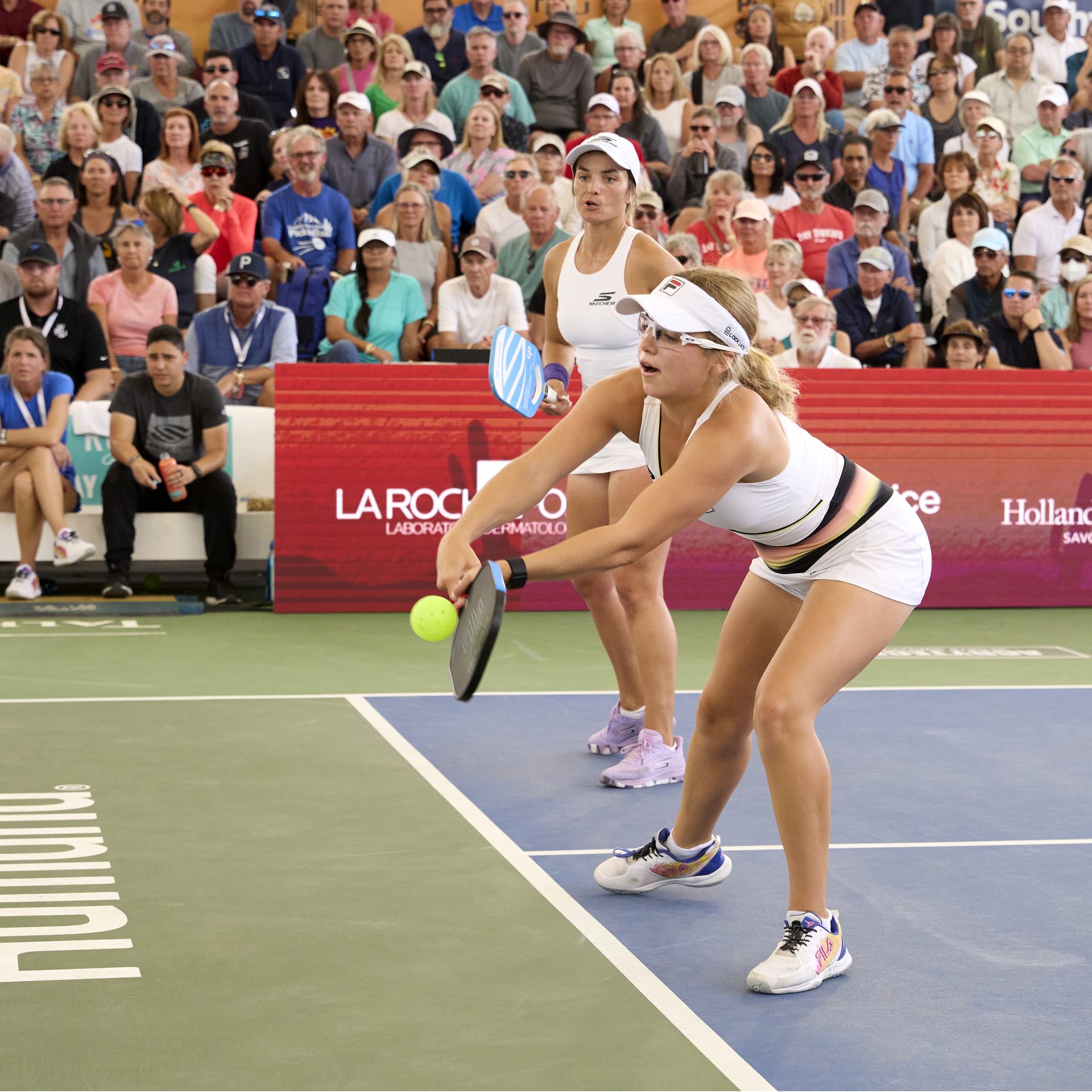
Original photo credit: Kerry Pittenger.
Start with three questions: where does the serve go, when can you hit the ball before it bounces, and which team can score? Work through those first, then play a few slow practice rallies before keeping score.
This guide focuses on ordinary doubles play using USA Pickleball's explanations. Confirm the format at your court or event; tournament variations and wheelchair-specific rules need their own checks against the official rules resources.
What are the basic rules of pickleball?
| Part of the game | Question to settle | Practice idea |
|---|---|---|
| Serve | Which service box am I aiming for? | Point to the target before serving |
| Opening exchange | Have both required bounces happened? | Say "serve bounce, return bounce" aloud |
| Kitchen | Am I playing a volley or a bounced ball? | Pause and identify which shot you played |
| Score | What scoring format are we using? | Agree on it before the first rally |
| Teamwork | Who will take a ball between us? | Call early during a slow exchange |
How do you serve?
Serve diagonally into the opposite service court, beyond the kitchen line. A serve touching that line is a fault. At contact, at least one foot must be on the ground behind the baseline; your feet must not touch the court or ground outside the imaginary extensions of the centerline and sideline. See USA Pickleball's serve summary.
For a volley serve, the arm moves upward at contact, the ball is not struck above the waist, and the paddle head is not above the highest part of the wrist. A drop serve follows a natural release and a bounce before contact; those volley-serve swing restrictions do not apply. Do not add force or spin to the drop. USA Pickleball explains the two serve types.
Choose one serve to practice first. Mark the intended receiving box with your eyes, check your feet, call the score and begin. A repeatable routine makes it easier to notice what went wrong when you miss.
How to Choose a Pickleball Paddle: Fit, Demo and Buying Guide
What is the two-bounce rule?
The receiving team must let the serve bounce before returning it. The serving team must then let the return bounce. Only after those two bounces may either team volley, subject to the kitchen rules. USA Pickleball rules summary.
Think of the opening as three separate actions: serve, return after a bounce, then the serving team's shot after another bounce. Hitting the serve's return out of the air is not allowed just because the serve already bounced on the other side.
What are the kitchen rules?
The kitchen is the non-volley zone, extending seven feet from the net on each side. A volley is a hit before the ball bounces. You cannot volley while touching the kitchen or its boundary. USA Pickleball's kitchen explanation.
You may enter the kitchen to play a bounced ball; you do not have to wait for that bounce before stepping in. Momentum from a volley must not carry you, or something you wear or carry, into the zone—even after the ball is dead. USA Pickleball rules summary.
Practice identifying the shot before worrying about how hard to hit it. Ask "has it bounced?" and "am I balanced outside the zone?" The important distinction is the volley restriction, not a general ban on being in the kitchen. For re-entry, momentum, partner-contact and other detailed situations, consult the full rulebook linked from the official rules hub.
How does traditional doubles scoring work?
In side-out scoring, only the serving team scores. Call three numbers: serving team's score, receiving team's score, then server number. Games commonly go to 11, with a two-point winning margin.
Start at 0-0-2: the opening team has one server for that first service turn. After a side out, the player on the right serves first. A serving team that wins a rally scores and that server changes sides. If its first server loses a rally, the partner serves. If its second server loses, service passes to the opponents. Server numbers apply to that turn, not permanently to a player. USA Pickleball side-out scoring explanation.
For example, at 4-2-1, a serving-team win makes it 5-2-1. A subsequent loss passes the serve to the partner at 5-2-2. Another loss gives the opponents service at 2-5-1.
Build Your Paddle Shortlist
Compare listed offers by budget, weight and shape
Does every rally award a point?
That depends on the format. In traditional side-out scoring, a receiving-team win earns a change of server or a side out, not a point. Rally scoring awards points regardless of which side served. Ask which system is in use before playing. USA Pickleball scoring overview.
Kyle's coaching note: the dink
The following teaching steps are retained from Kyle's original guide. They are coaching advice, separate from the rule explanations above:
Bend your knees, and lower your paddle beneath the height of the ball as it comes to you.
Set your paddle face in front of your body to an open position so that when you push the ball over the net, it travels low and softly with enough loft that it drops at the feet of your opponent.
— Kyle Koszuta, original Pickleball Portal guide
How should you organize your first session?
Begin with a short cooperative exchange instead of a full game. Take turns serving and returning, with both required bounces called aloud. Then try soft exchanges near the kitchen, distinguishing a bounced return from a volley.
Next, walk through a service turn without rushing: one player calls the score while the others check the receiving position. Let each player explain when service changes hands. Once everyone agrees, play a short game using the format you chose.
Keep one question for the end of the session rather than trying to master every shot at once. If the score keeps getting lost, practice service turns. If the kitchen is confusing, return to the volley-versus-bounce distinction. If the paddle is uncomfortable, use our first-paddle guide before buying an upgrade.
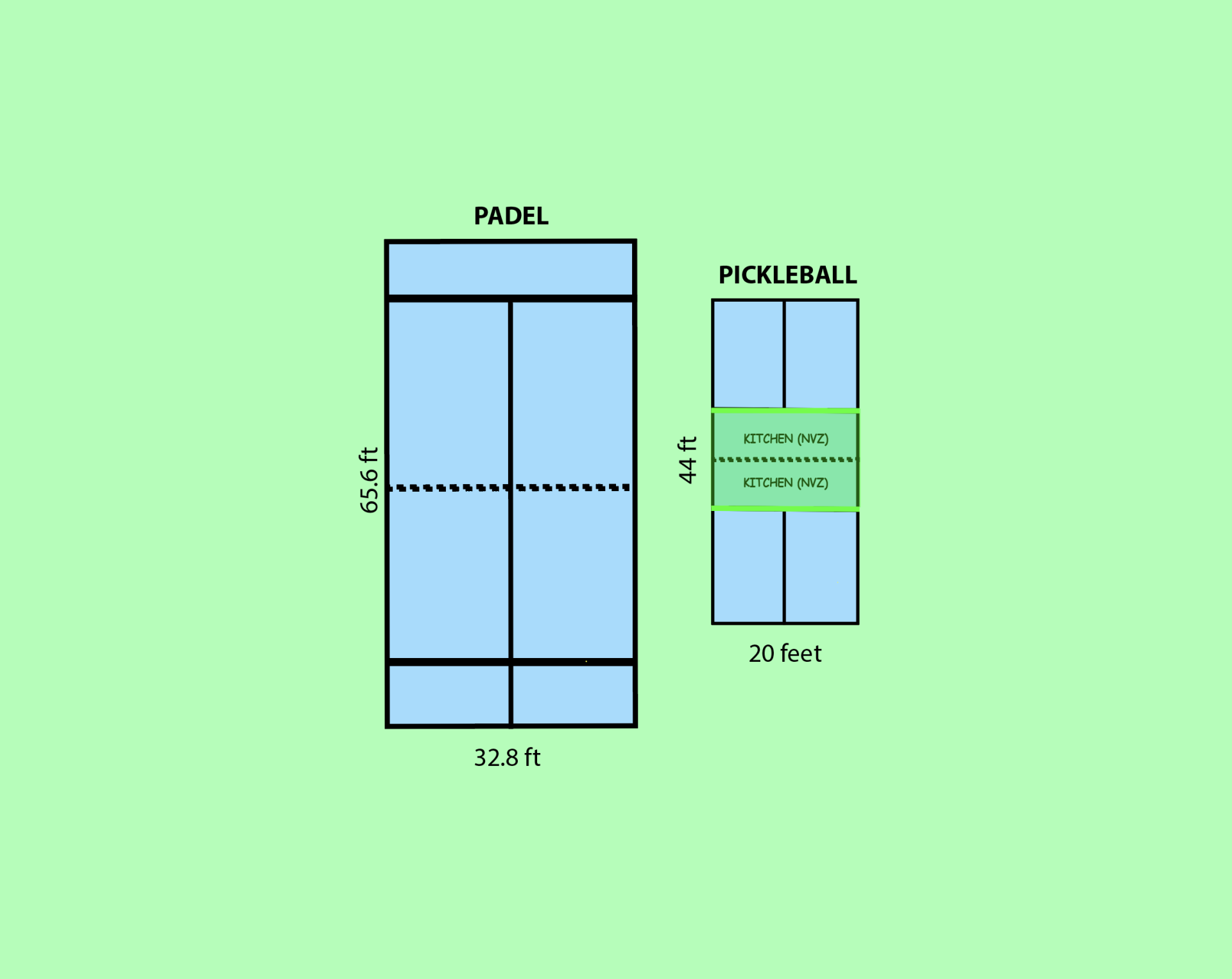
Padel vs. Pickleball (2026): A crisp, no-fluff comparison
What is the golden rule of pickleball?
“Golden rule” is an informal phrase, not the name of one rule that replaces the rulebook. For your first game, agree on the scoring format, call the score before serving and treat your partners and opponents respectfully. Learn the serve, two-bounce and kitchen rules separately; each still applies.
What are 5 things you cannot do in pickleball?
In the standard game described here, you cannot:
- Volley the serve before it bounces.
- Volley the return of serve before it bounces on the serving side.
- Volley while touching the kitchen or its boundary line.
- Let the momentum of a volley carry you into the kitchen, even after hitting the ball.
- Land a serve in the kitchen or on the kitchen line.
These are five common faults, not a complete list. Use the linked USA Pickleball rules for exceptions and other situations.
How difficult is pickleball to learn?
You can start with a small set of rules and build from there. For a first session, practice a legal serve, a return after the bounce and a short rally before adding full scoring. There is no fixed time in which everyone learns; a partner or beginner lesson can help you work through the confusing parts at your own pace.
Browse All Paddles
Explore paddle specifications and listed offers
Frequently Asked Questions
What is a volley?
A volley is a shot played before the ball bounces. The opening two-bounce rule and the kitchen restrictions determine when and where it is allowed.
Can I stand in the kitchen?
Yes. Being in the kitchen is allowed; volleying while touching it is not. You can step in to play a ball that bounces. Momentum restrictions also apply to volleys.
Do singles and doubles use tennis-style alleys?
No. Pickleball uses the same court size for singles and doubles. Do not apply tennis's doubles-alley distinction. See USA Pickleball's rules summary linked above.
Is this the complete tournament rulebook?
No. It is an introductory guide with clearly identified editorial updates. Use your event's current rules and the official rulebook for detailed situations, exceptions and competition procedures.

About Pikolai Starostin
Pickleball Portal Contributor
Pikolai Starostin is a contributor to Pickleball Portal, sharing insights and expertise to help players of all levels improve their game.