About our guides
Pickleball Portal has published pickleball guides since 2017. We are reviewing our archive for outdated prices, product details and unsupported testing claims. An article date does not establish that every claim has been rechecked. Confirm current product details and purchase terms with the retailer. We may earn a commission through affiliate links.
Picture Kip Lacey
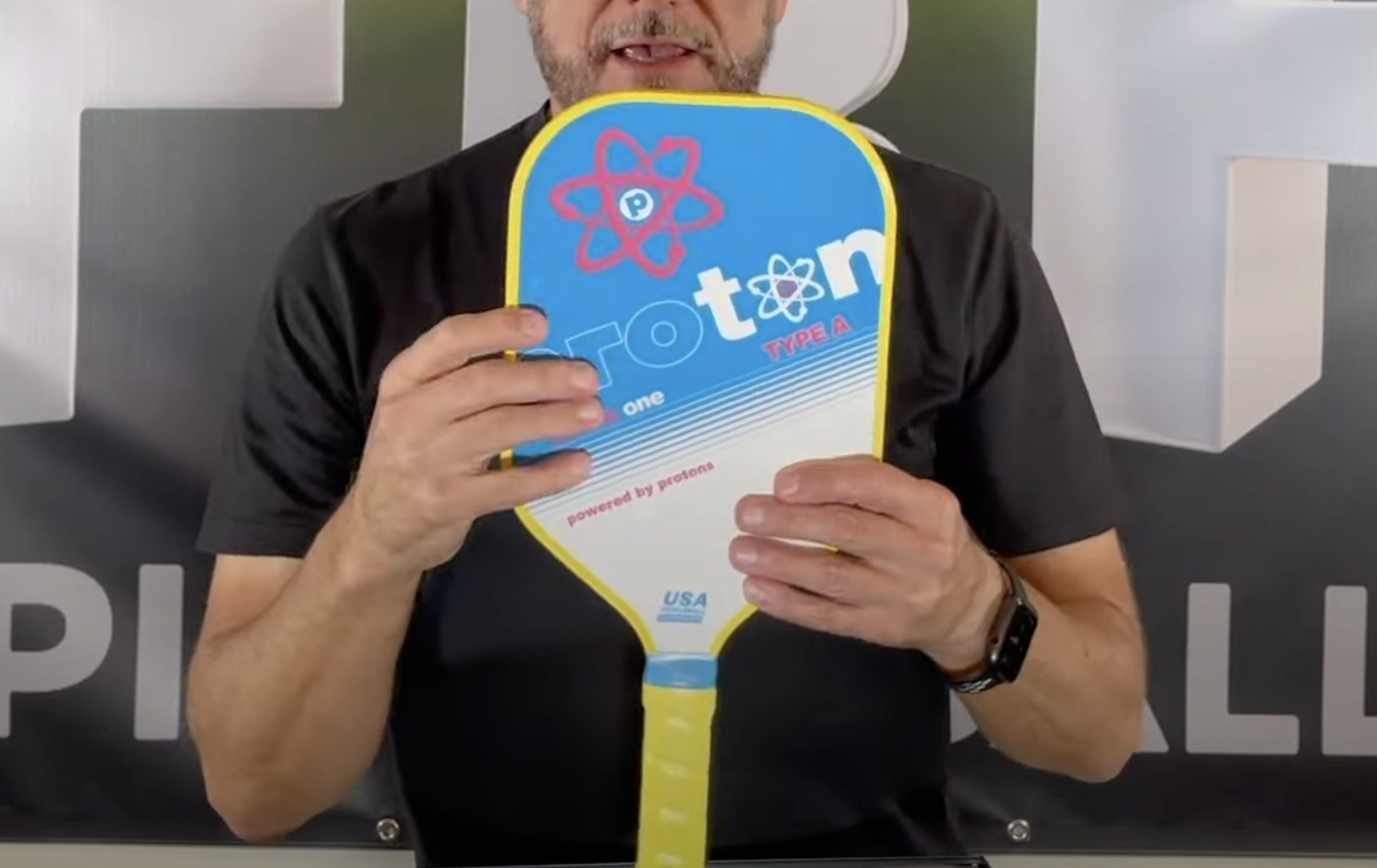
Hey guys, it’s Kip. Got a cool new review to do—the new Proton Series One Type A. We’re starting to see Proton paddles a lot out at the courts, and they’re instantly recognizable. There are four or five different colors, and they all pop. You can see them from quite a distance away, so you know exactly what they are, and we’re starting to see more and more of them.
Pros Using Proton
At the pro level, Andrei Daescu is hitting it and has been for quite a while, and I believe they just signed Meghan Dizon. She’s been playing with it in the last few tournaments, so it’s cool to see the Proton paddles out there. This is a company out of Arizona, and they’ve tried something just a little bit different with this paddle as far as some of the structural components.

Andrei Daescu

Meghan Dizon
Paddle Features and Construction
It has a 15mm poly core, which we’ve seen before, but the face, however, is a nanotech-treated carbon fiber. The nanotech is embedded in the surface along with the carbon, rather than just being sprayed on. We all know what spray texture does—it wears off. But so does the carbon fiber, because carbon fiber paddles will get grooves filled with dirt, and they wear down in time, just like the grooves on golf clubs. If you don’t clean them constantly, they’re going to wear out and affect the paddle’s performance.
Proton believes that their nanotech surface will hold up really well. They also use this technology in their softball bats, which take quite a beating since they’re hitting a hard surface at high speeds. This should be able to handle a pickleball over and over again for thousands of hits. I believe even at the pro level, Andrei and Meghan have been using the same paddle consistently without needing to switch it out, and the surface is doing a great job.
First Impressions of the Paddle
Now, right out of the box, it’s kind of slick, but Proton says the surface has more dwell time and is going to have great spin. When I felt this, I thought, “This isn’t going to spin at all,” so I’m anxious to see if it does. Proton says it has great spin and also claims that this paddle has the largest sweet spot on the market, which is exciting to find out.
[
View this post on Instagram
](https://www.instagram.com/p/DAW1aQQytP9/?utm_source=ig_embed&utm_campaign=loading)
This isn’t a Gen 2 thermoformed paddle, by the way, but the neck of this paddle is carbon fiber reinforced, so it should hold up pretty well. The paddle is 16 1/2 inches long, 7 1/2 inches wide, and has a 5 1/2-inch grip by 4 1/4-inch circumference. It’s a little weighty, coming in at 8.66 ounces, and it’s also a little pricey at $280, but a little cheaper at $255 with discount code PORTAL10. But if this nanotech-treated carbon fiber surface works as they claim, this may be a game changer. You never know—it could be something really cool that other paddle companies might investigate as well.
Testing on the Courts
After some time on the courts…
All right, guys, Proton Series 1 Type A—I did some target practice. Pretty good straight-line stuff. This paddle is a little head-heavy, and you can feel that immediately. Accuracy isn’t going to be this paddle’s problem.
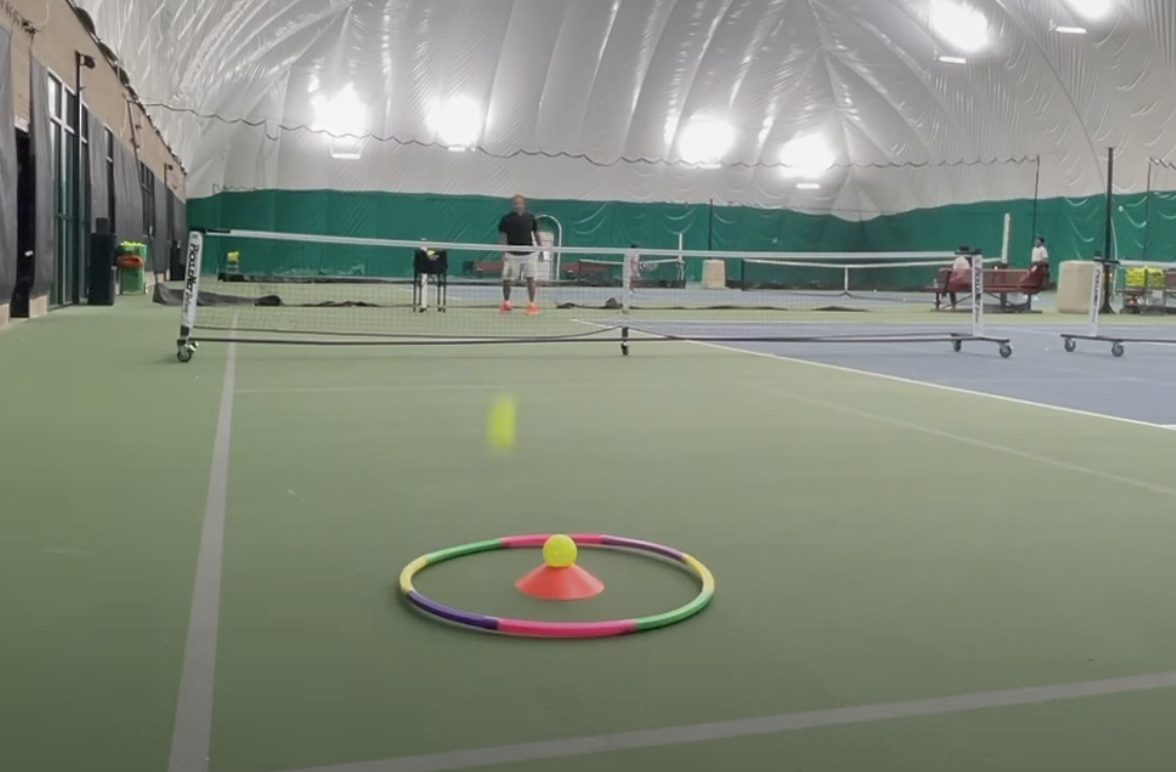
Accuracy test
Spin Test
I was initially skeptical about the spin because of how slick the surface was. But as I played more, the surface started to feel almost gummy—not sticky exactly, but it had some grip. The nanotech surface ended up generating way more spin than I expected, and the dwell time is excellent.
In terms of feedback and feel, the sweet spot is large, and the paddle performs well across the entire face. It’s a great defensive paddle too, allowing you to easily control shots at the net, thanks to the mass and plow-through.
Summary and Final Thoughts
After a few weeks getting to know the Proton Series 1 Type A, I can say this paddle really surprised me in some areas, and I became a fan the more I played with it. I’ll bounce through the attributes and how they changed as I played more.
First off, the weight—this paddle is 8.6 ounces, and I usually play with paddles around 8.3 or 8.4. So, it’s a little heftier than I’m used to, but the extra weight really allows it to perform well.
Starting with power—because everyone loves power—my normal serve is around 48-50 mph, and this paddle averaged out at 51.4 mph. That’s impressive, and thanks to the mass and plow-through of the 8.6-ounce weight, it delivers power without a lot of flyers.
Accuracy and control are where this paddle shines. You can park the ball on a dime. I was so impressed with the consistency and precision. On a scale, it’s a 10 out of 10 for accuracy.
The only downside is the weight—at 8.6 ounces, it might feel too heavy for some players. But if you’re used to that weight, this paddle is fantastic. It’s a little pricey, but I think we’re going to see more of this nanotech surface in the future.
I’m curious to hear from you guys—if you’ve played with this paddle, what do you think?
View the Proton Series One Type A on Amazon
Check out my other paddle reviews here.

About Kip Lacey
Pickleball Portal Contributor
Kip Lacey is a contributor to Pickleball Portal, sharing insights and expertise to help players of all levels improve their game.