About our guides
Pickleball Portal has published pickleball guides since 2017. We are reviewing our archive for outdated prices, product details and unsupported testing claims. An article date does not establish that every claim has been rechecked. Confirm current product details and purchase terms with the retailer. We may earn a commission through affiliate links.
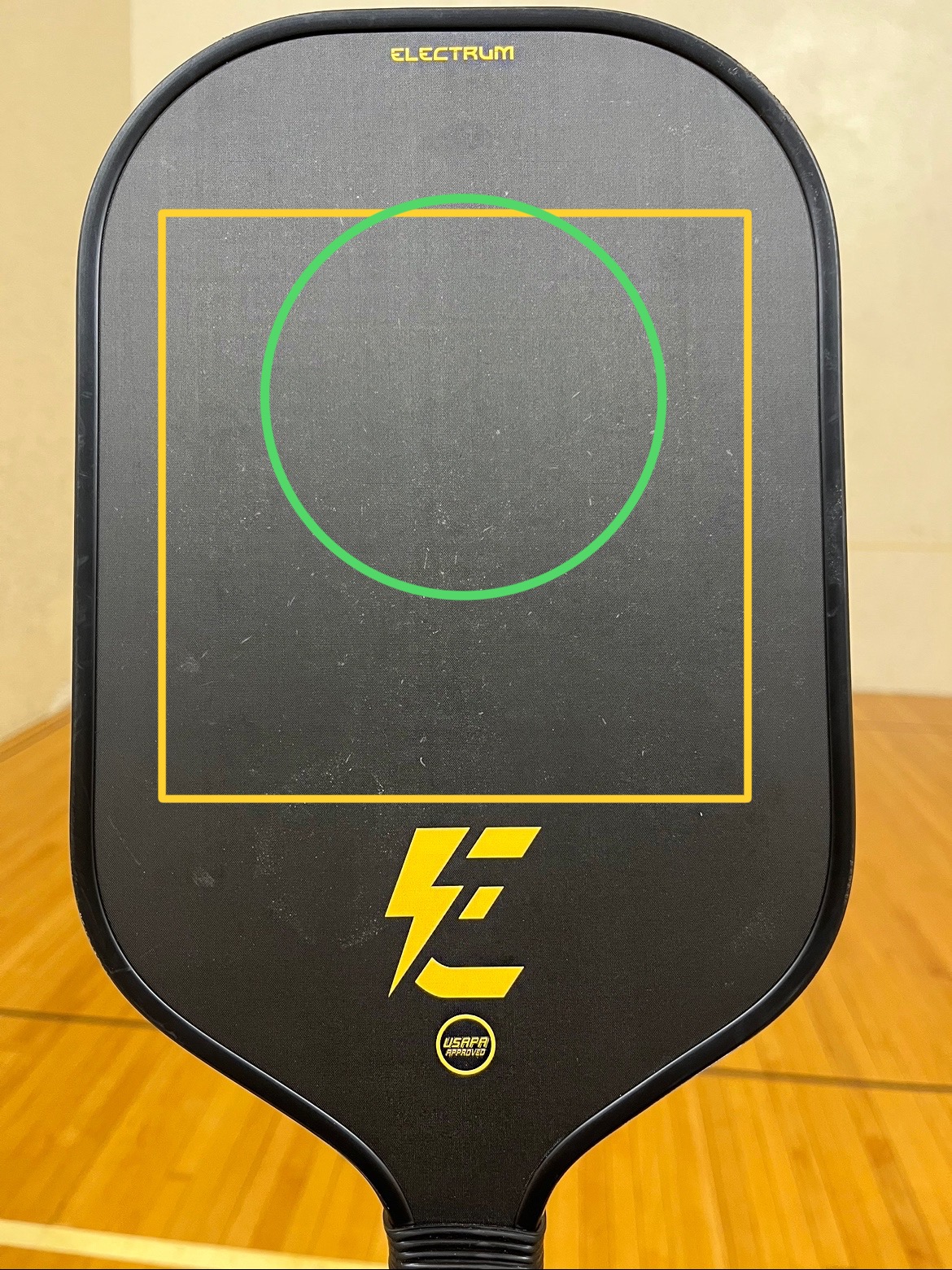
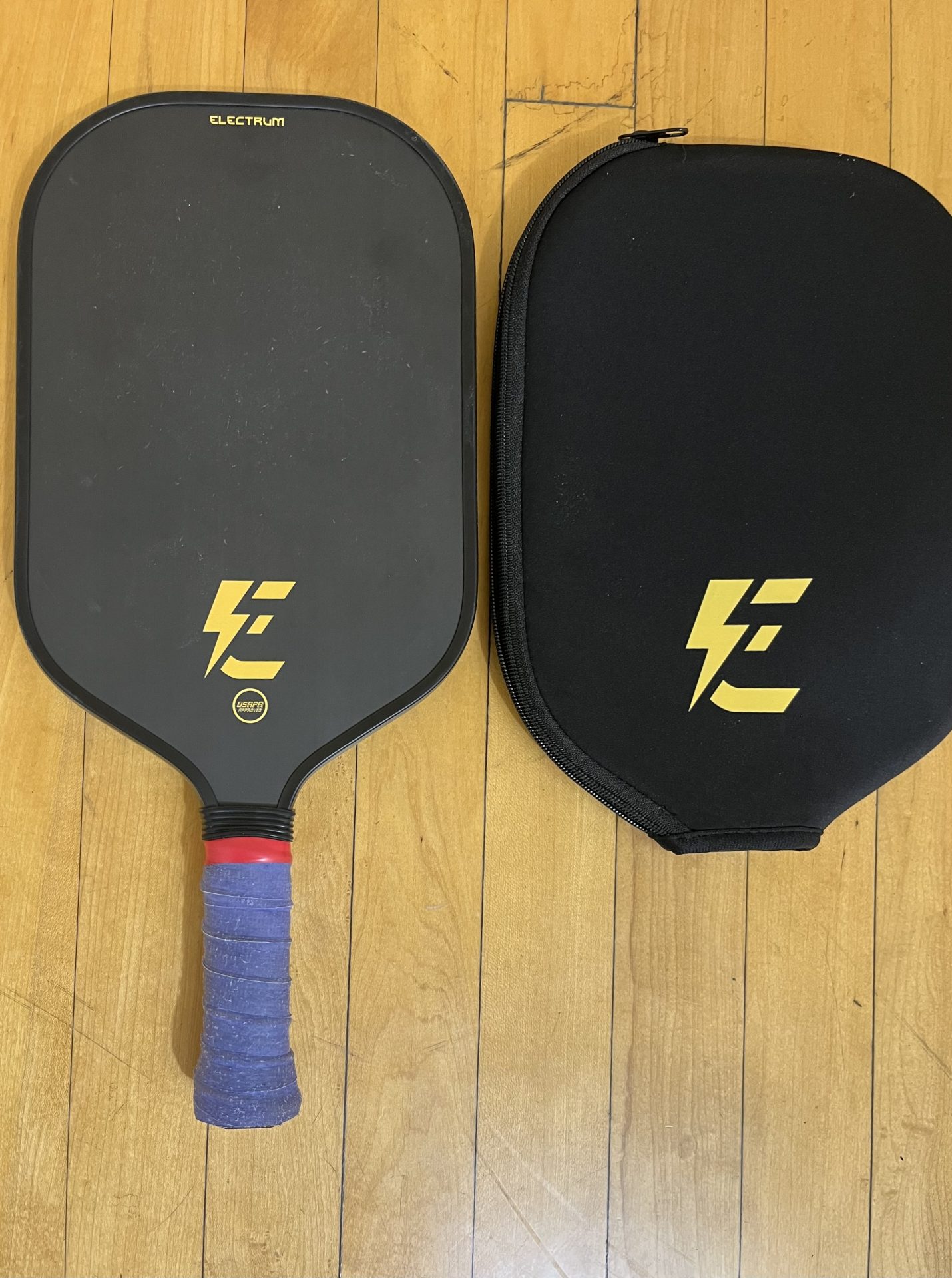 Electrum Model E on court
(Image credit: Dennis Rodriguez)
Last Updated: March 2026
The Electrum Model E 16mm is the best pure-control paddle we've tested for kitchen-line dominance. With a Super-Gritty RAW Carbon Fiber face, 8.0–8.5 oz weight, and an elongated 16.5" shape, it fits a Collin Johns-style defensive doubles game built around blocks, resets, and precise placement. The verdict: an A+ in the soft game, a C in raw pop at the net. If your strategy is to reset everything, make zero errors, and set up the point one dink at a time, this paddle is purpose-built for you. If you need to generate pace from compact volleys and hand battles, you'll find it lacking.
| Spec | Details |
|---|---|
| Weight | 8.0–8.5 oz |
| Face Material | Super-Gritty RAW Carbon Fiber |
| Core | Polypropylene Honeycomb |
| Shape | Elongated |
| Length | 16.5 in |
| Width | 7.375 in |
| Grip Size | 4.5 in (Thick) |
| Handle Length | 5.25 in |
| Balance | Slightly head-heavy |
| Best For | Control-first players, defensive doubles specialists, Collin Johns-style soft game |
| Main Tradeoff | Lacks pop at kitchen line; slows hands in hand battles |
What Is the Electrum Pickleball Paddle Model E?
The Electrum Model E is a control-oriented paddle built around a Super-Gritty RAW Carbon Fiber face over a standard polypropylene honeycomb core. The "super-gritty" designation refers to a coarser raw carbon weave than most paddles in its class — designed to produce maximum dwell time and spin on soft shots, not raw power.
At 8.0–8.5 oz, the Model E sits in the middleweight range but plays heavier due to its slightly head-heavy balance. The elongated 16.5" shape provides reach for taking balls out of the air at the kitchen line, which matches a defensive doubles game built around blocks, resets, and consistent placement.
The design philosophy is simple: minimize errors, extend rallies, and let opponents make mistakes. It's the anti-power-paddle.
Is the Electrum Model E Elite Any Good?
The Model E Elite is the upgraded version of the standard Model E. Based on the original Model E's performance profile, the Elite refines the same control-first architecture with any incremental improvements to the carbon weave or core construction Electrum has made.
This review covers the original 16mm Model E. If you are comparing it with newer Electrum variants, confirm the current dimensions, face material, and core details on Electrum's product page before assuming the same specifications.
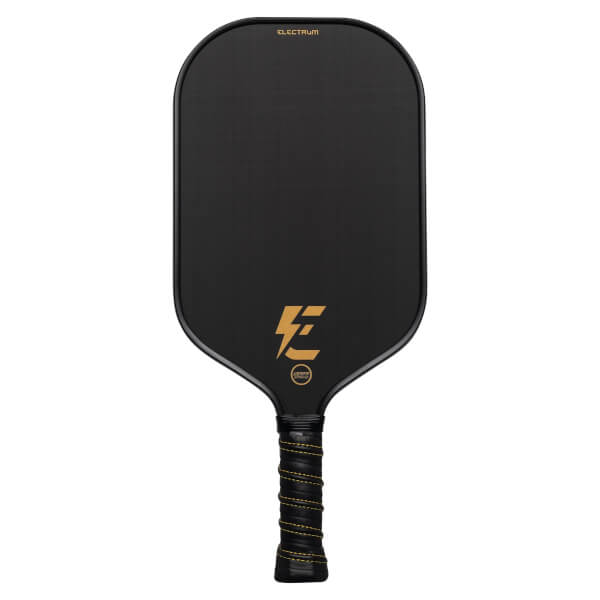 The Electrum Model E 16mm paddle shown on a table
(Image credit: Just Paddles)
Beginner Pickleball Paddles: Three Options and How to Choose
Build Quality and First Impressions
The minimalist aesthetic is intentional. The small lightning bolt "E" near the throat is the only design element against an otherwise clean raw carbon face. It comes with a neoprene head cover — a premium inclusion that most paddles in this range skip.
The grip at 4.5" is thick — one of the thickest in the market. This is either a feature or a drawback depending on hand size and preference. Players who like a thicker grip for wrist stability at the kitchen will find it ideal. Players accustomed to thinner grips may want to wrap with a light overgrip instead to get custom feel. Our reviewer Dennis Rodriguez went straight to an overgrip, while others in his playing group described the stock grip as excellent.
The 5.25" handle length is shorter than most elongated paddles, which typically run 5.5"–5.75". For two-handed backhand players, the initial adjustment is noticeable. It becomes manageable with a few sessions, and the shorter handle is the tradeoff for a larger face surface area — which is where the enlarged sweet spot comes from.
Build quality throughout is excellent. Dead spots were minimal in testing. The head-to-handle construction feels solid and premium.
How Does the Electrum Model E Perform at the Kitchen Line?
Exceptional. This is the paddle's defining characteristic and the reason it's worth discussing at all.
Dinks were effortless. Cross-court dinks floated over the net with complete directional control. The sweet spot, despite the elongated shape, was large enough to maintain that control even when taking balls out of the air slightly off-center. Players who habitually reach for kitchen shots and make edge contact found significantly fewer errors than with other paddles.
The reset capability was described as almost mechanical: hold the paddle up against a speedup and the ball drops back into the kitchen. This is partly the 16mm core absorbing energy, partly the carbon face's surface texture providing bite, and partly the head-heavy balance creating a stable platform for soft-handed blocks. The combination produces what Dennis called the "Excalibur" feel — an almost unfair ease at stopping hard balls and redirecting them soft.
Spin on dinks was strong. The Super-Gritty face grips the ball enough to put real rotation on cross-court angles. We did not find a reliable published RPM figure for the Model E 16mm, so this review treats spin as a qualitative play-test observation rather than a lab claim.
Power and Pop: Where the Model E Falls Short
At the kitchen line where compact volleys and speedups happen, the Model E falls short of the pop that higher-level players expect. The reason is physics: at the NVZ line you don't have time to load up momentum — you're relying on the paddle to generate energy from a short, quick movement.
The Model E's soft character absorbs energy efficiently (which is why resets are so good), but that same absorption works against you when you need to flick or punch a volley. 4.5+ players who generate counter-attacks from tight exchanges found their speedups lacked the energy to put balls away without giving opponents easy blocks.
This is not a defect — it's the paddle's identity. Control-focused, defensive players trade pop for the ability to make their opponents generate all the pace themselves.
From the baseline on serves and drives, the slightly head-heavy balance compensates: the momentum of a full swing produces solid power on baseline exchanges. The limitation is specific to NVZ compact movements.
Build Your Paddle Shortlist
Compare listed offers by budget, weight and shape
Is a 14mm or 16mm Paddle Better for Control Play?
For pure kitchen control: 16mm. The thicker core creates more dwell time at contact, absorbing energy from hard shots more effectively and giving you more time to direct the ball. This is why the Model E 16mm is the control specialist.
For a balance of control and pop: 14mm. Thinner cores return energy faster, adding pop to volleys and counters at the cost of some softness. If you want the Model E architecture with more NVZ aggressiveness, Electrum's 13mm version targets that player.
The rule of thumb: the more you value pure soft-game dominance over NVZ firepower, the more the 16mm serves you better.
What Are the Top 3 Pickleball Paddles Overall?
The "top 3" depends entirely on player style. But among control-first paddles in 2026:
- Electrum Model E 16mm — best pure kitchen control
- Gamma Obsidian 16 — best control at a lower price point
- Selkirk SLK Evo Control Max 2.0 — best value control paddle under $100
For spin-focused players, the Diadem Edge 18K leads. For all-court balance, options like the Volair Mach 1 series compete.
Electrum Model E: Head-to-Head vs. Alternatives
| Paddle | Thickness | Face | Kitchen Control | Pop | Price |
|---|---|---|---|---|---|
| Electrum Model E 16mm | 16mm | Super-Gritty Raw Carbon | A+ | C (NVZ compact volleys) | Check current retailer pricing |
| Electrum Model E 13mm | 13mm | Super-Gritty Raw Carbon | B+ | B | Check current retailer pricing |
| Gamma Obsidian 16 | 16mm | Raw Carbon Fiber | A | C+ | Check current retailer pricing |
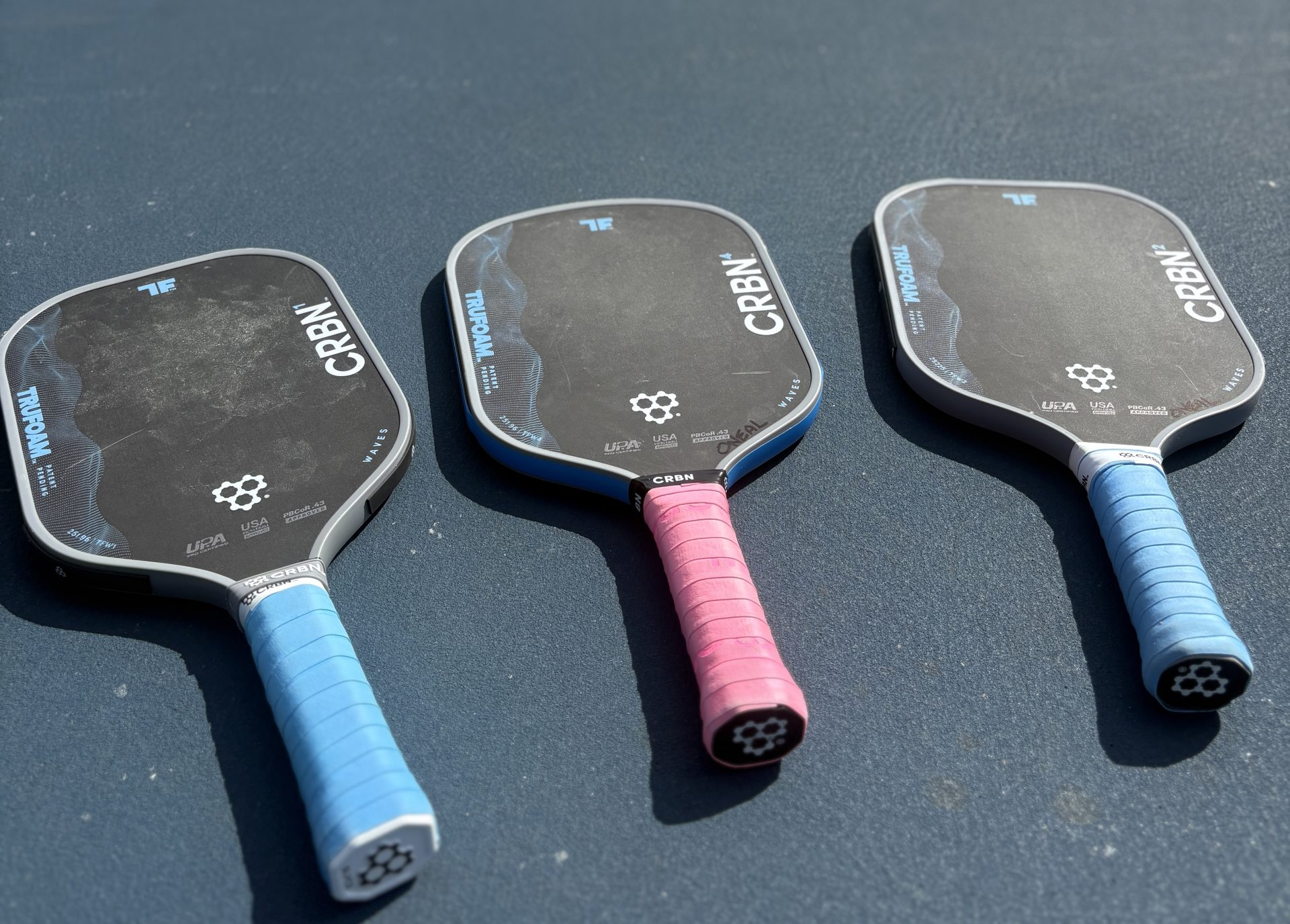
| CRBN 1 (16mm) | 16mm | Raw Carbon Fiber | A | C+ | Check current retailer pricing |

Pickleball Paddles for Spin: What to Compare Before Buying
Not the Right Paddle For You?
The Electrum Model E 16mm is not the right choice if:
- You play aggressively at the NVZ. The soft core limits your speedup and punch volley effectiveness against 4.5+ opponents who will block easily.
- You use a two-handed backhand regularly. The 5.25" handle is shorter than ideal for two-handed shots; you'll feel cramped compared to paddles with 5.5"+ handles.
- You want a lighter swing. The head-heavy balance slows hand speed in fast exchanges. Players who rely on quick reactions in hand battles will want a more neutral or handle-heavy paddle.
- You prefer a thinner grip. At 4.5", the thick grip requires adjustment. Budget for an overgrip if the stock feel doesn't suit you.
Frequently Asked Questions
What is the Electrum Pickleball Paddle Model E?
A control-first elongated paddle with Super-Gritty RAW Carbon Fiber face and a 16mm polypropylene honeycomb core. Used by Collin Johns to reach #1 in Men's Doubles, it excels at dinks, resets, and drops while limiting aggressive NVZ pop. Comes in 16mm (control) and 13mm (more pop) versions.
Is the Electrum Model E Elite any good?
Based on the strong performance of the standard Model E, the Elite maintains the same control-first architecture with refinements. It's a solid choice for control players; verify specific spec changes with Electrum before purchasing.
What are the top three pickleball paddles for control?
- Electrum Model E 16mm (A+ soft game)
- Gamma Obsidian 16 (excellent control, lower price)
- Selkirk SLK Evo Control Max 2.0 (best value under $100)
Is a 14mm or 16mm paddle better?
For kitchen control: 16mm. For balance of pop and control: 14mm. The 16mm absorbs energy better for resets and dinks; the 14mm returns energy faster for volley aggression.
Related Guides
- Gamma Obsidian 16 Paddle Review
- Selkirk SLK Evo Control Max 2.0 Review
- Complete Pickleball Paddle Buyer's Guide
- Best Pickleball Paddles for Spin

About Pikolai Starostin
Pickleball Portal Contributor
Pikolai Starostin is a contributor to Pickleball Portal, sharing insights and expertise to help players of all levels improve their game.